Retest Cognitive Assessments in Similar Conditions
Retesting can be useful, but only if you compare like with like. Many people take one online cognitive self-check, return a few days later, and assume any change in score means their brain function has improved or worsened. That is a risky shortcut. A score can move because your sleep was different, your stress was higher, your room was noisier, or you simply understood the tasks better the second time.
That matters on a site built for repeat use. The site frames its online cognitive assessment as a 25-question, 25-40 minute self-check across areas such as memory, attention, processing speed, and executive function. Its retesting feature can support reflection over time, but only when you treat repeated sessions as comparable measurements rather than instant proof of decline or recovery.
Why two scores are not automatically a trend
A second score does not always reveal a real change in cognitive ability. Sometimes it reflects familiarity. After one session, you know the pace, the interface, and the kind of mental switching the tasks require. That alone can make the next attempt feel easier.
A [PubMed-indexed study on repeated cognitive assessment] helps explain why. Researchers had 45 healthy adults complete the same battery 4 times at 10-minute intervals, and they found practice effects between the first and second assessments. In plain terms, people can improve simply because the test no longer feels new.
That does not make retesting useless. It means the result needs context. If your second score is better, the change may reflect growing familiarity, better rest, fewer interruptions, or some combination of those factors. If your second score is worse, the same logic applies in the other direction. One lower number does not automatically prove a meaningful decline.
How sleep and daily conditions can affect performance
Retesting is most misleading when the body and environment are different from the first session. Sleep is a major example. A [CDC/NIOSH sleep-deprivation overview] notes that sleep loss can impair information processing, learning, performance, and reaction time, and that short-term recall and working memory also decline.
Those effects line up with the same domains many online cognitive tools are trying to sample. If you took the first session after a decent night of sleep and the second after a restless night, your scores are not being compared under equal conditions. The same caution applies if you retest while sick, overwhelmed, distracted, or rushing between tasks.
This is one reason broad score swings should be read slowly. A bad testing day can affect how quickly you respond, how well you hold instructions in mind, and how consistently you stay focused. That is useful to notice, but it is not the same as confirming a medical condition.

What similar conditions should mean before you compare scores
You do not need laboratory conditions to retest responsibly. You do need a repeatable routine.
Start with timing. Try to retest at roughly the same time of day, especially if your focus changes across the day. Then control the setting. Use a similar device, similar browser setup, similar noise level, and similar amount of uninterrupted time. If one session happened in a quiet room and the next happened between messages, calls, and tabs, the scores are answering different questions.
It also helps to record a few notes beside each session: sleep quality, stress level, caffeine timing, medication changes, illness, and whether you felt rushed. Those notes often explain more than the raw number itself. On a site that offers a multi-domain self-check, this kind of context is especially important because different domains can react differently to the same day.
Spacing matters too. Very short retest intervals increase the chance that familiarity will shape the next score. A longer gap does not remove that issue entirely, but it gives you a fairer view than repeating the assessment again and again in one anxious sitting.
When a lower score should not be explained away
Context protects you from overreacting, but it should not become an excuse to ignore persistent changes. If memory or thinking problems keep showing up across daily life, a self-check is not enough. The same is true if those problems start to affect work, finances, medication routines, driving, safety, or conversations.
The [CDC guide to common warning signs] makes the same point. It notes that memory loss disrupting daily life is not a typical part of aging. It also encourages seeing a doctor when changes are noticeable in yourself or a loved one. That does not mean every off day signals a serious disorder. It does mean repeated concern deserves a clinical conversation, not endless home retesting.
Use the same rule if other people begin noticing the change, if symptoms persist, or if the decline feels new and hard to explain. At that point, the question is no longer whether one score is up or down. The real question is whether daily functioning is changing in a way that needs professional evaluation.
How to use the site responsibly for trend tracking
A responsible retest routine is simple.
1. Keep the setup stable
Retest under broadly similar conditions whenever you can. Same time of day, similar rest, similar device, and similar level of quiet is a strong starting point.
2. Compare patterns, not one number
Look for repeated movement across multiple sessions or domains rather than reacting to one isolated result. A single fluctuation is often less useful than a pattern you keep seeing.
3. Save the context with the score
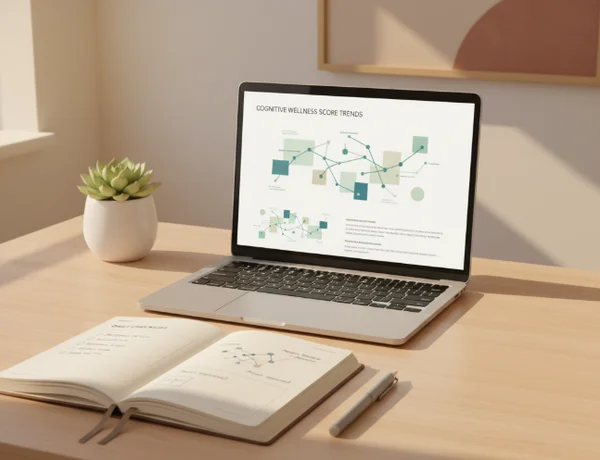
If the site’s AI report option helps you reflect on strengths and challenges, keep it paired with context. Add notes about sleep, stress, illness, and distractions. The score without those notes is incomplete.
4. Respect the site’s limits
Online cognitive self-checks can help you notice patterns and prepare better questions. They do not replace diagnosis, treatment planning, or a full clinical workup.
What to remember before your next retest
Retesting is most useful when the goal is trend awareness, not self-diagnosis. If you keep the conditions similar, record what was different, and compare patterns over time, your results become much easier to interpret. If you retest under wildly different conditions, the comparison may tell you more about the day than about your cognition.
Disclaimer: This article is for educational purposes only. An online cognitive self-check is not a diagnosis and should not replace professional medical advice, diagnosis, or treatment. If symptoms persist, if thinking changes start to affect daily life, or if safety concerns appear, see a healthcare provider for a proper evaluation.
The Takeaway
How long should I wait before retesting?
There is no single perfect interval for every person, but retesting immediately can magnify practice effects. In general, it is better to wait long enough that you are not simply repeating the same task while it still feels brand new.
Can one bad night change my score?
It can. Sleep loss can affect attention, reaction time, information processing, and working memory, so a poor night can make one session look worse than your usual baseline.
When should I talk to a healthcare professional?
Talk to a healthcare professional if symptoms persist, if memory or thinking changes start affecting daily tasks or safety, or if people around you are noticing the same shift. That kind of pattern deserves more than another home retest.