Digital Detox & Cognitive Assessment: How Screen Time Lowers Your Test Scores
We live in an age where our smartphones are almost like extra limbs. From the moment we wake up to the second we close our eyes, we are bombarded by notifications, emails, and social media feeds. But have you ever stopped to wonder what this constant stream of information is doing to your brain? Is your digital lifestyle lowering your cognitive performance?
Many people notice they feel more forgetful or less focused after a long day of screen use. When it comes time to measure your mental sharpness, these habits can show up in your results. Understanding the link between your digital environment and your brain health is the first step toward improvement. To see where you stand today, you can measure your cognitive strengths and get a clear baseline of your current mental performance.
This article explores how excessive screen time impacts your cognitive abilities and provides a practical plan to reset your brain. By the end, you will know how to optimize your habits for better focus, memory, and assessment scores.
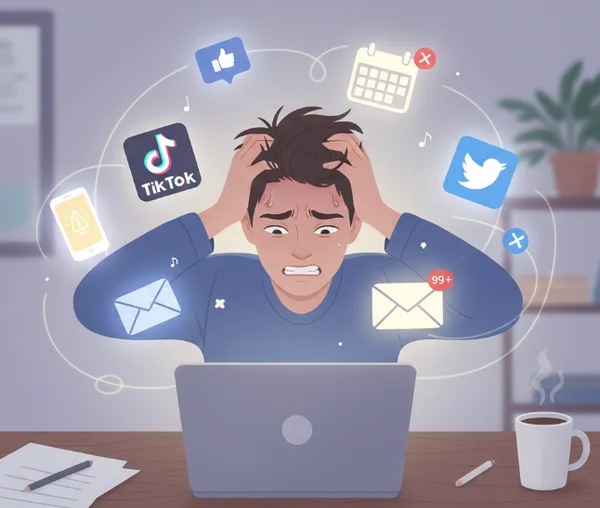
How Screen Time Impacts Cognitive Assessment Results
The relationship between technology and the human brain is complex. While digital tools help us stay productive, they also demand a high level of "cognitive currency." Every time you check a notification, your brain spends energy switching tasks. Over time, this constant demand can lead to mental fatigue. This makes it much harder to perform well during a cognitive assessment.
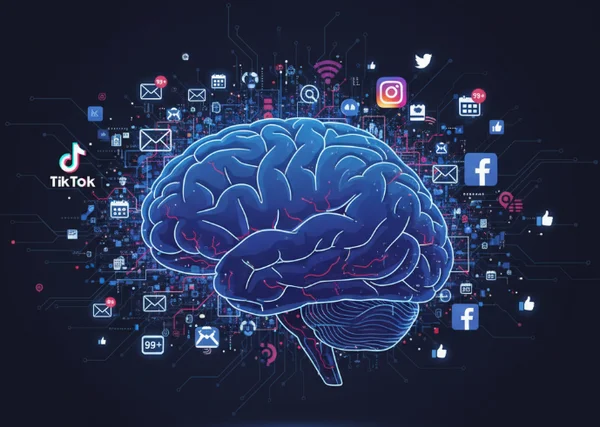
Cognitive Load Theory and Memory Formation
Neuroscientists call this "high cognitive load." When your brain is overwhelmed by incoming data, it struggles to store information or think critically. This state of overload is particularly damaging when you are trying to learn new skills or retain complex instructions. If your mental "RAM" is full of digital noise, there is little room left for deep processing.
Stress Hormones and the Hippocampus
Constant digital stimuli push your brain into high arousal. This state triggers cortisol release—your body’s main stress hormone. High levels of cortisol over long periods can interfere with the hippocampus. This is the part of the brain responsible for forming new memories and navigating spatial information. When this area is compromised, your ability to perform on memory-based tasks during a cognitive assessment test significantly drops.
The Dopamine Loop and Deep Work
The "dopamine loop" created by social media likes and infinite scrolling trains the brain to seek short-term rewards. This habit makes it difficult to engage in "deep work." If your brain is conditioned for a quick hit of dopamine every few seconds, maintaining focus on a complex 20-minute task feels physically painful. Digital detoxing helps recalibrate this reward system, allowing you to sustain the concentration required for high-level testing.
Key Cognitive Skills at Risk
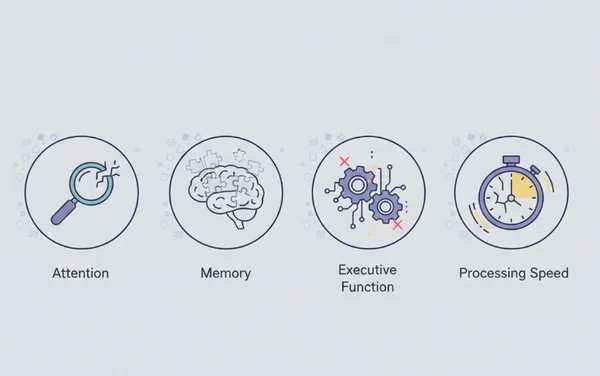
Most professional assessments look at specific areas of brain function. Excessive screen time can create "noise" in these areas, leading to lower scores than you might actually be capable of achieving.
- Attention: Constant digital interruptions fragment your ability to stay on task.
- Memory: Relying on the internet to remember facts (the "Google Effect") can weaken your biological recall.
- Executive Function: This includes planning and problem-solving. A cluttered digital life often leads to impulsive decision-making.
- Processing Speed: While fast-paced games can help, general digital overload often slows down your ability to react to new, non-digital information.
To understand how these areas are functioning for you right now, it is helpful to review personalized cognitive insights through a standardized platform.
The Performance Gap: Digital Habits vs. Optimal Results
There is often a significant gap between a person’s potential and their actual performance on a cognitive assessment. This gap is frequently caused by poor "digital hygiene." If you take a test immediately after two hours of mindless scrolling, your brain is likely too tired to show its true strength.
Attention Span in the Age of Notifications
The average human attention span has decreased significantly over the last decade. Short-form videos and rapid-fire news feeds have conditioned us to expect information in 15-second bursts. This is the opposite of what is required during a comprehensive online cognitive assessment.
When you are used to constant distraction, a 20-minute test can feel exhausting. Your brain may "wander" or lose track of instructions. Improving your focus requires training your brain to ignore the "pings" and "dings" of the digital world.
Working Memory: Digital Multitasking's Hidden Cost
Many people believe they are good at multitasking, but research shows that the human brain does not actually do two things at once. Instead, it switches between tasks very quickly. This "switch cost" drains your working memory.
Working memory is your brain's "scratchpad." It holds the information you need while you are solving a problem. If your working memory is cluttered by thoughts of unread emails, you will have less space to solve the puzzles found in a cognitive skills assessment test. Reducing digital clutter allows your working memory to function at its full capacity.
Analyzing Performance Patterns with AI
Advanced assessment systems look beyond simple right and wrong answers. They analyze response patterns, such as how long it takes you to react after a distraction or whether your accuracy drops toward the end of a session.
These patterns often reveal "cognitive fatigue," a common symptom of digital burnout. By identifying these fluctuations, you can receive actionable insights. If you want to see how your habits might be affecting your data, you can analyze your performance data through detailed AI-generated reports. This helps you move from guessing to knowing exactly how to improve.
The 7-Day Cognitive Optimization Detox Plan
If you feel your screen time is holding you back, a "digital detox" can help reset your neural pathways. You don't have to give up technology forever; you just need to change how you use it. This 7-day plan is designed to help you prepare for an upcoming assessment or simply improve your daily mental clarity.
Days 1–3: Building Awareness and Setting Boundaries
The first three days are about breaking the automatic habit of reaching for your phone.
- Track Your Usage: Use your phone’s built-in "Screen Time" tool to see which apps consume the most of your time.
- Turn Off Non-Essential Notifications: Disable alerts for everything except phone calls and direct messages from important people.
- Create "No-Phone Zones": Keep electronics away from the dinner table and out of the bedroom. This reduces the cortisol spikes associated with late-night browsing.
- Morning Delay: Do not check your phone for the first 30 minutes after waking up. Let your brain transition naturally from sleep to alertness.
Days 4–5: Deep Focus Protocols for Brain Health
Once you have reduced the noise, you can start rebuilding your focus. This is the time to prepare your mind for a cognitive assessment for adults.
- The Pomodoro Technique: Practice working on a single, non-digital task for 25 minutes, followed by a 5-minute break. This builds "focus endurance."
- Monotasking: Choose one hobby—like reading a physical book—and do it without any background music or podcasts.
- Brain Exercises: Engage in puzzles that require logic and spatial reasoning. This primes the neural circuits used in formal assessments.
During these days, it is a great idea to evaluate your mental focus to see if your clarity feels sharper than it did on Day 1.
Days 6–7: Integrating Sustainable Digital Habits
The goal of a detox is not just a temporary fix, but a long-term lifestyle change for better brain health.
- Batch Your Digital Tasks: Instead of checking email 20 times a day, check it three times for longer periods.
- Physical Activity: Replace 30 minutes of scrolling with a walk. Physical movement increases blood flow to the brain and supports neuroplasticity.
- Quality Over Quantity: Be intentional with your screen time. Use technology for connection and learning rather than passive consumption.
By Day 7, you should feel a sense of "cognitive clarity." This is the perfect time to take a final assessment to record your improved baseline.
Reclaiming Your Mental Edge
Your brain’s performance isn’t set in stone—daily habits like screen use directly shape it. Think of digital detox as decluttering your mental workspace. For clinicians and self-testers alike, understanding these digital stressors is the first step toward accurate data and peak mental performance.
By implementing a digital detox and being mindful of your screen habits, you can reclaim your attention span and strengthen your memory. Remember, the goal is to use technology as a tool to enhance your life, not a distraction that controls it.
Are you ready to see how sharp your brain really is? Establish your baseline today and begin your journey to peak performance to discover the true potential of your mind.
The Takeaway
How much screen time is considered excessive for cognitive health?
There is no single "magic number," but research suggests that more than two to three hours of non-work-related screen time can begin to impact focus. The quality of the activity matters too; passive scrolling is generally more taxing on cognitive resources than active learning. To see if your habits are affecting you, it is helpful to access a free cognitive assessment to monitor your performance.
Can a short digital detox really improve my assessment scores?
Yes. Even a 24-hour break from high-stimulation digital content can lower stress hormones and improve your "deep focus" abilities. Many users report feeling more "present" and less impulsive after a short detox. This directly translates to better accuracy on complex cognitive tasks.
What's the best way to prepare cognitively before taking an online assessment?
We recommend taking the test in a quiet environment, free from digital distractions. Ensure you are well-rested and hydrated. Avoid high-dopamine activities like social media for at least 30 minutes before you establish your baseline to ensure your brain is in a calm state.
Are certain types of screen activities more harmful to cognition than others?
Passive consumption, such as "doomscrolling" through negative news, tends to be more harmful to attention spans than interactive content. Activities that require logic, such as digital chess, can actually be beneficial for your cognitive ability assessment results if done in moderation.