ADHD Cognitive Assessment: Online Testing for Attention Challenges
Do you find yourself constantly struggling with focus, organization, or impulsivity? Many adults face these persistent challenges, wondering if they might be signs of Attention-Deficit/Hyperactivity Disorder (ADHD). Navigating the world of assessments can be confusing, but modern tools offer a clear starting point. Online cognitive assessments provide a convenient and insightful way to explore attention patterns and executive functions from the comfort of your home.
This guide will walk you through how an ADHD cognitive assessment works, what it measures, and how the results can empower you with a better understanding of your unique cognitive profile. By exploring your cognitive strengths and weaknesses, you can take the first step toward effective management and self-improvement. To gain initial insights into your cognitive patterns, you can start your test on our platform.
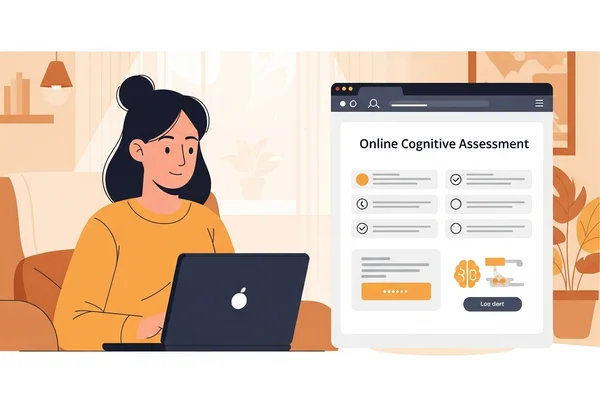
Understanding ADHD and Cognitive Patterns
ADHD is more than just an inability to sit still; it's a complex neurodevelopmental condition that significantly impacts cognitive functions. These functions are the mental processes that allow us to plan, focus attention, remember instructions, and juggle multiple tasks successfully. In adults with ADHD, certain cognitive patterns are often observed, which can explain difficulties in daily life, from meeting deadlines at work to managing household chores.
Understanding these patterns is the first step toward identifying challenges and finding effective strategies. A cognitive assessment doesn't just look for symptoms; it examines the underlying mental processes to create a clearer picture of how your brain works.
ADHD Symptoms Through a Cognitive Lens
When we look at common ADHD symptoms through a cognitive lens, we see a direct link to specific mental skills. For instance, frequent forgetfulness isn't a character flaw but can be tied to challenges in working memory—the brain's "sticky note" system for holding temporary information. Similarly, difficulty starting or finishing tasks often relates to issues with task initiation and planning, which are key executive functions.
Other common examples include:
- Inattention: This can manifest as a struggle with sustained attention (staying focused on one task) or selective attention (filtering out distractions).
- Impulsivity: This may be linked to challenges in inhibitory control, the cognitive skill that helps us pause and think before acting.
- Disorganization: This often stems from difficulties in planning, prioritizing, and organizing information, all of which are crucial executive functions.
Executive Function Challenges in Adult ADHD
Executive functions are a set of high-level mental skills managed by the brain's frontal lobe. They act as the "CEO" of the brain, directing other cognitive processes. For many adults with ADHD, this is the core area of difficulty. An executive function ADHD evaluation often reveals specific challenges.
Key executive functions impacted by ADHD include:
- Working Memory: The ability to hold and manipulate information for short periods. This affects following multi-step directions or remembering the beginning of a sentence while reading.
- Cognitive Flexibility: The skill of switching between different tasks or thinking about a problem from multiple perspectives.
- Inhibitory Control: The capacity to control impulsive responses and resist distractions.
- Planning and Prioritization: The ability to set goals, break them down into steps, and decide what is most important.
An online cognitive assessment can provide valuable data on how well these executive functions are performing, offering a deeper understanding of your personal challenges.
Online Cognitive Assessment for ADHD Screening
In today's digital world, you no longer need an immediate clinical visit for an initial screening. An online cognitive assessment for ADHD provides a highly accessible and data-driven way to evaluate cognitive patterns related to attention and executive function. These tests are designed to be user-friendly while being grounded in principles of neuropsychology.
Our AI-powered platform, CognitiveAssessment.net, uses a series of engaging tasks to measure your performance across key cognitive domains. This provides a detailed, objective look at your cognitive profile, moving beyond simple questionnaires. An online cognitive assessment can serve as a powerful first step in your journey to self-discovery.
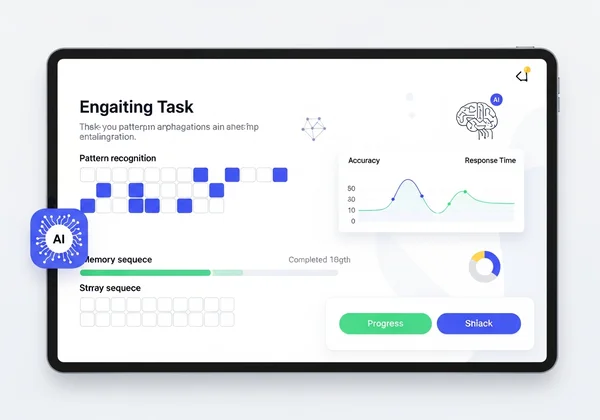
What Online ADHD Assessments Measure
A comprehensive online assessment for ADHD-like symptoms goes beyond a simple "focus test." It evaluates a range of interconnected cognitive skills to identify specific patterns. The goal is to see not just if you get distracted, but how and why.
Key areas measured typically include:
- Sustained Attention: Your ability to maintain focus over an extended period.
- Attention Control: How well you can shift your focus and ignore irrelevant stimuli.
- Processing Speed: The speed at which you can perceive information and respond to it.
- Working Memory: Your capacity to hold and use information in the short term.
- Impulse Control: Your ability to resist making a knee-jerk reaction.
By analyzing these areas together, the assessment can highlight patterns often seen in individuals with ADHD, such as variability in performance or specific weaknesses in executive control.
The Science Behind Digital ADHD Detection
Modern online cognitive assessments are not random quizzes. They are built on decades of research in neuropsychology and cognitive science. Platforms like CognitiveAssessment.net translate established, clinically-informed testing principles into a digital format. These tasks are carefully designed to be sensitive to the subtle cognitive markers associated with ADHD.
The addition of Artificial Intelligence (AI) enhances this process. Our AI engine analyzes your response patterns—including speed, accuracy, and consistency—to generate a highly personalized report. This AI-powered analysis can detect nuances that a simple score might miss, offering deeper insights into your cognitive profile. While these tools are for screening and informational purposes and do not provide a medical diagnosis, they offer a scientifically-grounded starting point for understanding your brain.
Interpreting Results and Next Steps
Completing an assessment is just the beginning. The real value comes from understanding your results and using that knowledge to make positive changes. A detailed report can feel overwhelming at first, but it is a roadmap to better self-awareness and practical action. The goal is to move from screening and identification to management and improvement.
Whether your results confirm your suspicions or reveal unexpected strengths, they provide a foundation for building effective strategies. This information can empower you to have more informed conversations with healthcare professionals and to implement targeted techniques in your daily life.
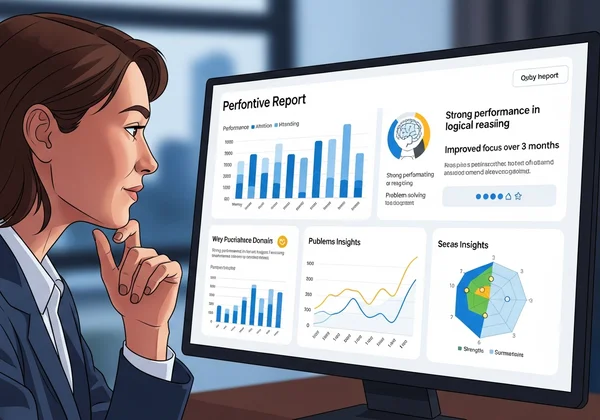
Understanding Your ADHD Assessment Report
A good assessment report should be clear, comprehensive, and actionable. At CognitiveAssessment.net, our reports are designed to be easily understood by everyone, not just clinicians. Your report will typically break down your performance in each cognitive domain, showing you where you excel and where you face challenges.
Instead of just numbers, the report translates your data into practical insights. For example, it might explain how a lower score in working memory could affect your ability to follow conversations or remember shopping lists. It provides a balanced view of your cognitive abilities, helping you understand your unique brain wiring. To see your results and get a personalized report, begin your assessment today.
From Screening to Management: Practical ADHD Strategies
Armed with insights from your assessment, you can begin to implement practical strategies tailored to your specific needs. This is about working with your brain, not against it.
Here are some examples of strategies based on common ADHD-related cognitive challenges:
- For Working Memory Issues: Use external aids like notebooks, apps, or alarms. Break down complex instructions into smaller, written steps.
- For Attention Control Difficulties: Practice mindfulness meditation to train your focus. Use noise-canceling headphones or create a distraction-free workspace.
- For Planning Challenges: Use a planner or digital calendar to map out your tasks. Employ techniques like the Pomodoro Method (working in focused 25-minute intervals) to improve task initiation.
These strategies, guided by your assessment results, can help you build routines that support your cognitive function and improve your overall quality of life.
The Coda
When attention, focus, and organization constantly feel like uphill battles, it's easy to feel alone in your struggle. Yet, uncovering the reasons behind these challenges is your first step toward reclaiming control. An online ADHD cognitive assessment offers a private, accessible, and data-driven way to explore your cognitive profile. It helps translate frustrating daily experiences into understandable patterns related to executive functions like working memory and attention control.
This knowledge empowers you to move from confusion to clarity. When you understand your cognitive strengths and weaknesses, you can develop targeted strategies. This helps you communicate more effectively with professionals and navigate daily life with greater confidence.
If you're ready to gain a deeper understanding of your attention and cognitive skills, the journey begins with a single step. Start your comprehensive assessment today and receive an AI-powered report with actionable insights.
Summary
Ever wonder if your struggles with focus might be more than just distraction? Here's what cognitive testing can reveal...
What are the signs of adult ADHD that might show up in cognitive testing?
In cognitive testing, signs of adult ADHD often appear as inconsistent performance. This can include slower processing speeds, challenges with sustained attention over time, and lower scores in working memory and inhibitory control. The test might reveal a pattern of quick but impulsive answers or difficulty filtering out distractions in specific tasks.
Wondering if an online test is the same as a doctor's visit? Let's clarify the difference.
Can online cognitive assessments diagnose ADHD?
No, online cognitive assessments are screening tools, not diagnostic instruments. They can identify cognitive patterns consistent with ADHD and provide valuable insights into your brain's functioning. However, a formal diagnosis of ADHD must be made by a qualified healthcare professional, such as a psychiatrist or psychologist, who will conduct a comprehensive evaluation that includes clinical interviews and a review of your personal history.
Curious about how reliable these online tools really are? Here’s a look at their accuracy.
How accurate are online ADHD screening tests compared to professional evaluation?
High-quality online screening tests, especially those based on neuropsychological principles, can be very accurate at identifying cognitive markers associated with ADHD. While they do not replace a full professional evaluation, they serve as an excellent, data-driven first step. Our AI-powered cognitive assessment tool is designed for precision, providing a reliable snapshot of your cognitive functions to guide your next steps.
Trying to pinpoint which mental skills are most involved? These are the key areas.
What cognitive domains are most affected in ADHD?
The cognitive domains most affected in ADHD are collectively known as executive functions. These primarily include working memory (holding information in mind), inhibitory control (stopping impulsive actions), cognitive flexibility (shifting between tasks), and attention control (focusing and filtering distractions). Planning and organization skills are also frequently impacted.
Ready to take an assessment? Here’s how to set yourself up for the best results.
How can I prepare for an online ADHD assessment?
To get the most accurate results, find a quiet place where you won't be interrupted for about 20-30 minutes. Ensure you are well-rested and have eaten. Turn off notifications on your phone and computer. Approach the test with a calm mindset; there is no "passing" or "failing." The goal is simply to capture a true reflection of your current cognitive abilities.