What is Working Memory? Take a Free Online Cognitive Assessment to Improve It
Have you ever walked into a room and completely forgotten why you went there? Or have you struggled to follow a complex recipe with multiple steps? These common experiences are directly linked to a powerful mental tool known as working memory. It’s the engine that drives much of our daily thinking, problem-solving, and learning.
But what exactly is working memory, and can you do anything to make it stronger? This guide will explore this vital cognitive skill in simple terms. We will cover how it differs from short-term memory, why it's essential for success, and how it can be evaluated. Most importantly, you will learn practical, science-backed strategies to enhance its performance.
Want to unlock your full potential? Start by understanding your cognitive profile. A comprehensive online cognitive assessment gives a clear baseline on your working memory and more. It delivers personalized insights for your journey.
What Exactly is Working Memory?
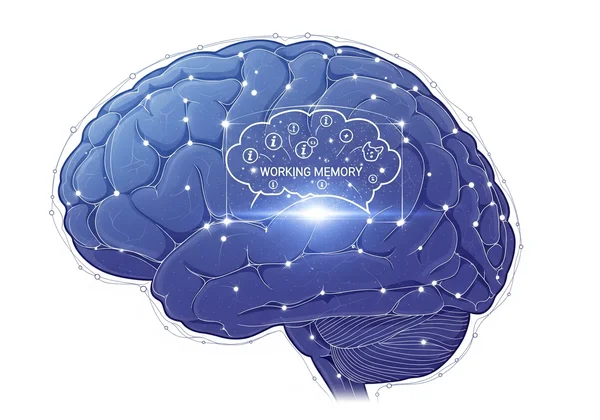
Think of working memory as your brain's mental workspace or a temporary sticky note. It's a system that allows you to hold a small amount of information in your mind for a short period and actively work with it. It’s not just about storing information; it’s about simultaneously storing and manipulating it to complete a task.
For example, when you calculate a 15% tip on a restaurant bill in your head, you're using working memory. You have to hold the original bill amount, calculate 10%, then 5%, and finally add them together. This active process of holding, processing, and combining information is the core function of working memory.
The Difference Between Working Memory and Short-Term Memory
People often use the terms "working memory" and "short-term memory" interchangeably, but they are not the same. Understanding the difference is key to appreciating how your brain functions.
- Short-Term Memory is a passive storage system. It’s like a temporary holding area for recent information, such as remembering a phone number just long enough to write it down. It holds information without doing anything with it.
- Working Memory is an active system. It involves both holding information and actively processing or manipulating it. It's the "work" part that makes it different. For instance, if you have to repeat that same phone number backward, you are engaging your working memory.
Bottom line: short-term memory just holds info. Working memory puts it to work.
Why Working Memory is Crucial for Daily Life and Learning
A strong working memory is a superpower in today's information-rich world. It is fundamental to nearly every complex cognitive task we perform. Its capacity directly impacts our ability to learn, reason, and navigate daily challenges.
Here are a few areas where it plays a vital role:
- Learning: Following a teacher’s lecture, taking notes, and connecting new ideas to what you already know all rely on working memory.
- Reading Comprehension: To understand a paragraph, you must hold the beginning of a sentence in your mind as you read to the end.
- Problem-Solving: Keeping track of different pieces of information is essential for planning, strategizing, and finding solutions.
- Following Instructions: Whether assembling furniture or following a new recipe, you need to remember each step and its sequence.
- Conversations: It allows you to remember what the other person said while you formulate your response.
How is Working Memory Assessed? Key Tests & Methods
Because working memory is so important, psychologists and neuroscientists have developed various ways to measure it. A cognitive skills assessment helps identify an individual's capacity to hold and manipulate information. This reveals cognitive strengths and potential areas for improvement.
Traditional Working Memory Tests: From Digit Span to N-Back
For decades, cognitive assessments have used specific tasks to evaluate working memory. You may have even heard of some of them.
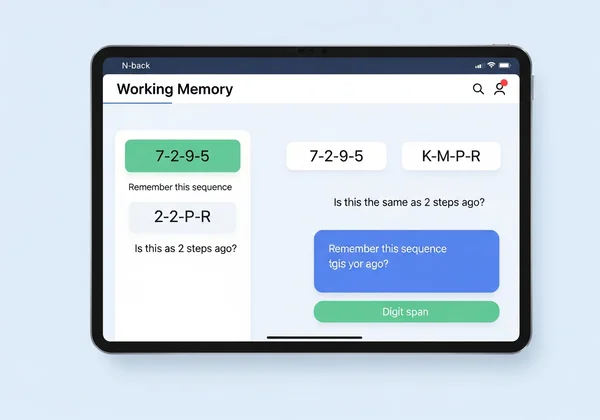
- Digit Span Test: This is a classic test where a person is asked to listen to a sequence of numbers and repeat them back. In a more complex version, they must repeat the numbers in reverse order, which heavily engages the "working" component.
- N-Back Task: In this task, a participant is shown a sequence of items (like letters or images) one by one. They have to indicate when the current item is the same as the one presented 'n' steps back (e.g., 2 steps back). This requires constantly updating the information held in the mental workspace.
These traditional methods are valuable but often require a clinical setting and a trained administrator.
The Role of Online Cognitive Assessments in Evaluating Working Memory
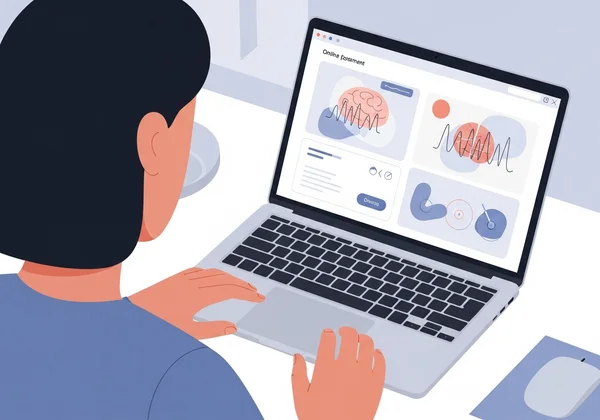
Today, technology has made cognitive assessment more accessible than ever. Modern online platforms offer a convenient and effective way to evaluate working memory and other cognitive skills from the comfort of your home.
Advanced platforms like our AI-driven tool go further than basic scores. They use AI to analyze your response patterns, timing, and accuracy. The result? A detailed, personalized report that gives you a much deeper understanding of your cognitive profile. This provides not just data, but actionable insights into how your mind works.
Common Challenges and Decline in Working Memory Across Ages
It’s normal for working memory capacity to fluctuate. Factors like stress or fatigue can cause temporary dips in performance. However, some people may experience more persistent challenges that impact their daily lives.
Recognizing Signs of Working Memory Impairment
If you or someone you know is struggling with working memory, you might notice some common signs. It’s important to remember that experiencing these occasionally is normal, but a consistent pattern may be worth exploring further.
Common signs include:
- Difficulty following conversations or multi-step directions.
- Frequently losing your train of thought mid-sentence.
- Struggling to perform mental math that was once easy.
- Forgetting the purpose of an action, like why you entered a room.
- Finding it hard to stay organized and complete complex projects.
Factors That Can Impact Working Memory Performance
Several factors can influence how well your working memory functions. Even better? You can tackle most of these yourself.
-
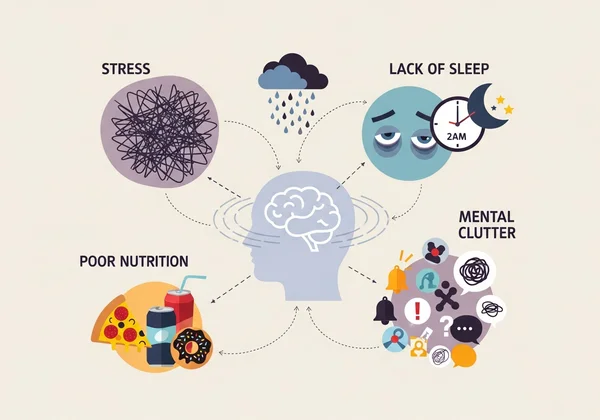
Stress and Anxiety: High levels of cortisol (the stress hormone) can interfere with the prefrontal cortex, the brain region crucial for working memory.
-
Lack of Sleep: Sleep is essential for memory consolidation and brain restoration. Poor sleep consistently leads to poor cognitive performance.
-
Poor Nutrition: Your brain needs the right fuel. A diet lacking in essential nutrients like omega-3 fatty acids and antioxidants can impair cognitive function.
-
Lack of Mental Stimulation: Just like a muscle, the brain benefits from regular exercise. A lack of engaging activities can lead to a decline in function.
-
Aging: While some age-related decline is normal, an active and healthy lifestyle can significantly mitigate its effects.
Science-Backed Strategies to Improve Working Memory for Adults
The brain has an amazing ability to adapt and change, a quality known as neuroplasticity. This means that with the right strategies, you can improve working memory performance at any age. It’s not about changing your brain's hardware but about training it to work more efficiently.
Brain Training Exercises and Cognitive Games
Engaging in targeted brain training can strengthen your working memory. Cognitive games that challenge you to hold and manipulate information are particularly effective. Look for activities that require you to:
- Remember sequences (like in the game Simon).
- Solve complex puzzles or strategy games (like Sudoku or chess).
- Use N-back training apps, which are specifically designed to target working memory.
The key is to find activities that are challenging but not overwhelming. Consistency is more important than intensity.
Lifestyle Adjustments: Sleep, Nutrition, and Mindfulness
Your daily habits have a massive impact on your brain health. Making small, consistent changes in these three areas can lead to significant improvements in working memory.
- Prioritize Sleep: Aim for 7-9 hours of quality sleep per night. Establish a consistent sleep schedule and create a relaxing bedtime routine to help your brain recharge.
- Eat for Your Brain: Incorporate brain-boosting foods into your diet. This includes fatty fish (rich in omega-3s), blueberries (antioxidants), nuts, and leafy greens.
- Practice Mindfulness: Mindfulness meditation has been shown to improve focus and reduce mental clutter. Even 10-15 minutes a day can help calm your mind, allowing your working memory to function more effectively.
Tracking Your Progress: Why Regular Assessment Matters
How do you know if your efforts are paying off? The best way to track your cognitive improvement is through regular assessment. Establishing a baseline allows you to see how your scores change over time as you implement new strategies.
A regular brain health check can motivate you to stick with healthy habits. It also provides objective feedback on your progress. It transforms the abstract goal of "improving my memory" into a measurable, achievable objective.

Empower Your Mind: Your Journey to Enhanced Working Memory Starts Now
Working memory is a fundamental cognitive skill that shapes your ability to learn, work, and engage with the world. While it can face challenges from stress, aging, and lifestyle, it is not fixed. By understanding what it is and adopting science-backed strategies, you can actively strengthen and support its function.
Your journey begins with a single step: understanding where you stand today. Gaining clarity on your cognitive strengths and weaknesses is empowering. It provides you with a personalized roadmap for growth and self-improvement.
Ready to discover your cognitive profile? Start your assessment today and take the first step toward a sharper, more resilient mind.
Frequently Asked Questions About Working Memory and Cognitive Assessment
What is a cognitive assessment and what does it measure?
A cognitive assessment evaluates your key mental abilities. It covers memory (short- and working-term), attention, executive functions like planning, and processing speed. The goal is to provide a comprehensive snapshot of your cognitive health.
How can I test my working memory ability at home?
While you can try simple exercises like reciting a list of items backward, a structured online tool offers a more reliable and objective measure. A scientifically designed platform can provide a standardized score and track your performance over time. To get an accurate baseline, it is best to test my cognitive ability using a comprehensive tool.
Are online cognitive tests reliable for working memory?
The reliability of online cognitive tests varies greatly. Simple online quizzes may be entertaining but lack scientific validation. However, platforms developed by neuropsychologists and AI experts, which are based on established testing principles, can be highly reliable. They offer a convenient and accurate way to assess cognitive functions like working memory.
What happens if my working memory test results show challenges?
Receiving results that indicate challenges is not a diagnosis of a disorder. Instead, it should be viewed as valuable information. A good assessment report will highlight these areas and provide actionable suggestions for improvement, such as the lifestyle changes and brain training exercises mentioned in this article. It's a starting point for a proactive approach to your brain health.