Cognitive Tracking: Monitoring Brain Health Trends Over Time
Many of us think of a cognitive test as a one-time event—a snapshot taken on a single day. But what if your brain's health is more like a dynamic story, unfolding over months and years? A single picture can't capture the whole narrative. Understanding this story is the key to proactive brain health.
The real power lies in tracking your cognitive journey over time. This approach, known as longitudinal tracking, moves beyond a single score to reveal patterns, subtle changes, and opportunities for growth. It transforms cognitive assessment from a simple check-up into a powerful tool for personal insight and long-term well-being.
By establishing a baseline and monitoring your progress, you can gain a deeper understanding of your mind's unique strengths and challenges. This guide will explore why tracking matters and how a modern online cognitive assessment can help you become the author of your own brain health story.
Understanding Longitudinal Cognitive Tracking: What It Is & Why It Matters
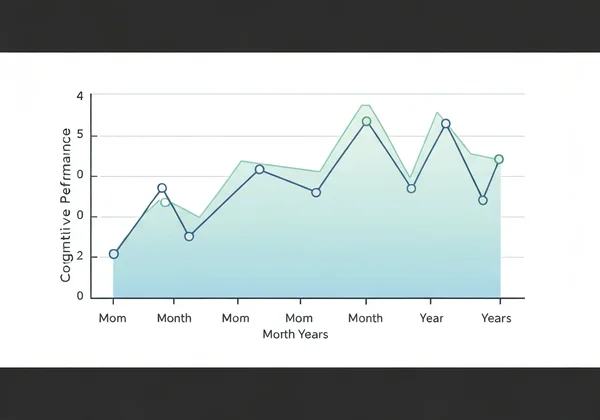
Longitudinal cognitive tracking is simply the practice of taking cognitive assessments at regular intervals over an extended period. Instead of a one-off test, you create a series of data points that map out your cognitive performance over time. This method provides a far richer and more accurate picture of your brain health than any single assessment ever could.
Beyond a Single Snapshot: The Limitations of One-Time Cognitive Assessments
A one-time cognitive test can be a useful starting point, but its results are heavily influenced by temporary factors. Did you sleep poorly the night before? Are you feeling stressed or distracted? Did you just have a large cup of coffee? Any of these can affect your performance on a given day.
A single score doesn't account for these daily fluctuations. It might show you where you stand at that exact moment, but it can't tell you the direction you're heading. Relying on one test is like checking the weather on one day in April and assuming it represents the entire spring season.
Establishing Your Cognitive Baseline: The Starting Point for Tracking
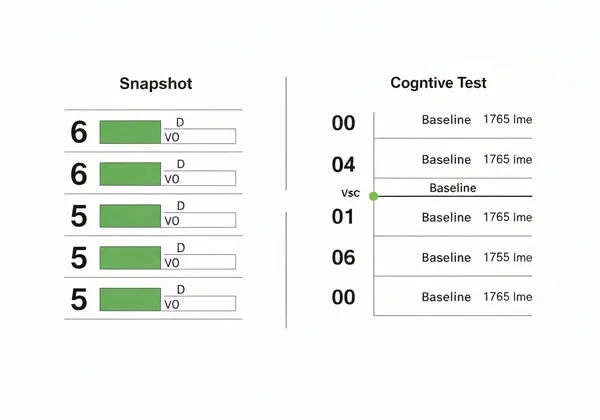
The first step in any meaningful tracking is to establish your personal cognitive baseline. This initial assessment serves as your benchmark—the "Day One" of your cognitive health journey. It captures a comprehensive view of your abilities in key areas like memory, attention, and executive function.
This baseline is crucial because it provides a personalized reference point. Everyone's cognitive profile is unique. By comparing future results to your own starting point, rather than just a general average, you can identify changes that are truly significant for you. This is the foundation upon which all future insights are built.
The Science of Tracking: How Repeated Assessments Reveal Patterns
The core value of tracking lies in trend analysis. When you collect multiple data points over time, you can begin to see patterns emerge. A slight dip in one test might be a random fluctuation, but a consistent downward trend over several months could signal a meaningful change that warrants attention.
Conversely, seeing your scores in memory or reasoning steadily improve can provide powerful validation for positive lifestyle changes you've made, such as a new exercise routine or learning a new skill. Repeated assessments allow you to connect the dots between your daily life and your cognitive performance, revealing what helps and what hinders your mental sharpness.
The Key Benefits of Proactive Cognitive Tracking
Actively monitoring your cognitive health isn't just about collecting data; it's about empowering yourself with knowledge. This proactive approach offers clear, tangible benefits that can enhance your well-being and give you a greater sense of control over your future.
Early Detection: Spotting Subtle Changes and Potential Cognitive Decline
One of the most significant cognitive tracking benefits is the ability to spot subtle shifts early on. Our brains are incredibly resilient and can compensate for minor changes, often making them unnoticeable in daily life. Consistent tracking can highlight small, persistent changes in specific cognitive domains before they become major concerns.
This early awareness is not about causing alarm. Instead, it provides you with valuable information that can facilitate more productive conversations with healthcare professionals. Having objective data that shows a trend over several months can be far more helpful to a doctor than relying on memory alone.
Personalized Insights & Actionable Strategies for Brain Health
Tracking transforms generic advice into a personalized action plan. By observing how your scores respond to changes in your life, you can identify what works for you. For example:
- You might notice your attention scores improve after a week of prioritizing sleep.
- You could see your problem-solving abilities get a boost when you consistently engage in puzzles or strategic games.
- You may find that certain stressful periods correlate with a temporary dip in memory performance, highlighting the need for better stress management techniques.
This direct feedback loop helps you build a lifestyle that actively supports your cognitive vitality. You can start your test today to begin gathering these valuable insights.
Empowering Proactive Brain Health Management & Lifestyle Adjustments
Ultimately, knowledge is power. When you track your cognitive health, you move from a passive role to an active one. You are no longer just reacting to potential problems; you are proactively managing one of your most vital assets.
Seeing your progress visualized in a report can be a powerful motivator to stick with healthy habits. It gives you concrete evidence that your efforts are paying off, encouraging you to continue investing in activities that support long-term brain health, from diet and exercise to social engagement and mental stimulation.
How CognitiveAssessment.net Helps Monitor Your Cognitive Journey
Understanding the importance of tracking is the first step. The next is finding the right tool to do it effectively, consistently, and easily. CognitiveAssessment.net was designed by neuropsychologists and AI experts specifically for this purpose, turning complex data into clear, actionable insights.
Leveraging AI for In-Depth Trend Analysis & Predictive Insights
Our platform goes beyond simple scorekeeping. The AI-powered engine analyzes your response patterns across multiple tests to identify subtle trends that might otherwise be missed. It looks at not just what you answered, but how you answered, providing a deeper level of analysis.
This intelligent system helps distinguish between minor daily fluctuations and significant long-term shifts in your brain health progression. The AI-generated reports offer personalized insights based on your unique cognitive journey, helping you understand the story your data is telling.
Visualizing Your Cognitive Patterns: Clear Reports & User-Friendly Dashboards
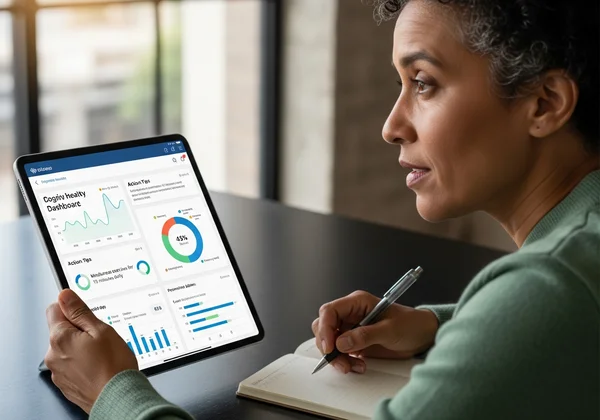
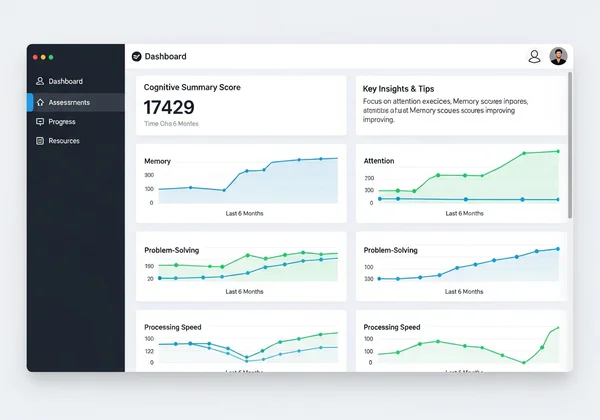
We believe that data should be accessible, not intimidating. After each assessment, your results are added to a user-friendly dashboard that visualizes your progress over time. Simple charts and graphs allow you to see your trends at a glance across different cognitive domains.
Instead of wading through confusing numbers, you get a clear visual narrative of your cognitive health. This makes it easy to track your progress, share information with your family or doctor, and make informed decisions. You can view your progress and see for yourself how simple it is to follow your cognitive journey.
Real-World Case Studies: Seeing Progress and Identifying Needs
Our users' experiences demonstrate the power of tracking. Consider these anonymized examples:
- Maria, a 52-year-old teacher, started tracking her cognitive health quarterly. After introducing daily meditation and a Mediterranean diet, she was thrilled to see a steady improvement in her attention and memory scores over six months, confirming her new habits were making a real difference.
- David used the tool to help monitor his 75-year-old father. By establishing a baseline and conducting bi-monthly check-ins, he noticed a gradual decline in executive function. Armed with six months of consistent data, he was able to have a more specific and productive conversation with his father's doctor, leading to a proactive care plan.
Who Benefits Most from Tracking Brain Health Progression?
While everyone can benefit from being more informed about their cognitive health, longitudinal tracking is particularly valuable for certain groups who are focused on maintaining or optimizing their mental performance.
Seniors & Caregivers: Staying Ahead of Age-Related Cognitive Shifts
For adults over 50 and their caregivers, regular tracking offers peace of mind and a proactive way to manage age-related cognitive changes. It provides an objective tool to monitor memory and other functions, helping to distinguish between normal aging and trends that may require a professional consultation. This empowers families to stay ahead of potential issues and manage brain health with confidence.
Lifelong Learners & Self-Improvers: Optimizing Mental Performance
Individuals committed to personal growth and self-improvement can use cognitive tracking as a mental fitness tracker. Just as athletes monitor their physical performance, lifelong learners can track their cognitive sharpness. It helps them measure the impact of new learning strategies, brain-training exercises, or lifestyle adjustments, providing the data needed to optimize their mental performance for work, study, and personal projects.
Professionals & Researchers: Gathering Robust Longitudinal Data
For clinicians, educators, and researchers, a standardized and reliable tool for longitudinal data collection is invaluable. CognitiveAssessment.net provides an efficient way to conduct preliminary screenings and monitor cognitive changes in patients or study participants over time. The platform’s scientific foundation and detailed reporting support both clinical work and academic research.
Embrace Your Cognitive Journey: The Power of Continuous Understanding
Your brain's health is a dynamic story—one you can actively shape. A single cognitive assessment offers only one page, but consistent tracking allows you to read the entire book. By monitoring your cognitive trends, you gain the power to understand your unique patterns, celebrate your progress, and take proactive steps toward a healthier, sharper mind.
By monitoring trends, you gain the power to celebrate progress, spot subtle shifts, and partner with professionals confidently. This empowers you to not just observe your brain health, but to actively shape it for years to come.
Ready to move beyond the snapshot and discover your brain's unique story? Start your personalized cognitive tracking journey today and unlock a deeper understanding of your mind.
Frequently Asked Questions About Cognitive Tracking & Brain Health
How can I test my cognitive ability at home and track it over time?
You can easily test and track your cognitive ability at home using a reliable online platform. A scientifically validated online assessment tool is designed for this purpose. The process is simple: take an initial comprehensive test to set your baseline, and then retake the assessment at regular intervals (e.g., every 3-6 months) to monitor your progress and identify trends through your personalized dashboard.
How do you tell if you have cognitive decline, and how does tracking help?
Identifying cognitive decline can be complex—small memory lapses are normal. Tracking provides objective data, helping distinguish typical fluctuations from meaningful trends. Instead of relying on subjective feelings, you can see if there is a consistent downward trend in your test scores over several months. If you notice such a pattern, it serves as a concrete starting point for a conversation with a healthcare professional. Remember, these tools provide insights but do not offer a medical diagnosis.
What do changes in my cognitive assessment results mean?
Changes in your results can mean many things. An improvement might reflect positive lifestyle habits, while a minor dip could be due to stress, lack of sleep, or other temporary factors. A consistent trend is more significant. The platform's reports help contextualize these changes, but for a medical interpretation, it is always best to consult with a doctor who can consider your overall health profile. Start by getting your baseline assessment to understand your starting point.
At what age should I start getting regular cognitive assessments?
There is no single "right" age, but many experts suggest that adults aged 50 and older may find regular tracking particularly beneficial for monitoring age-related changes. However, proactive brain health is for everyone. Younger adults focused on peak performance, students wanting to optimize learning, or anyone interested in understanding their cognitive strengths can benefit from starting at any age.